
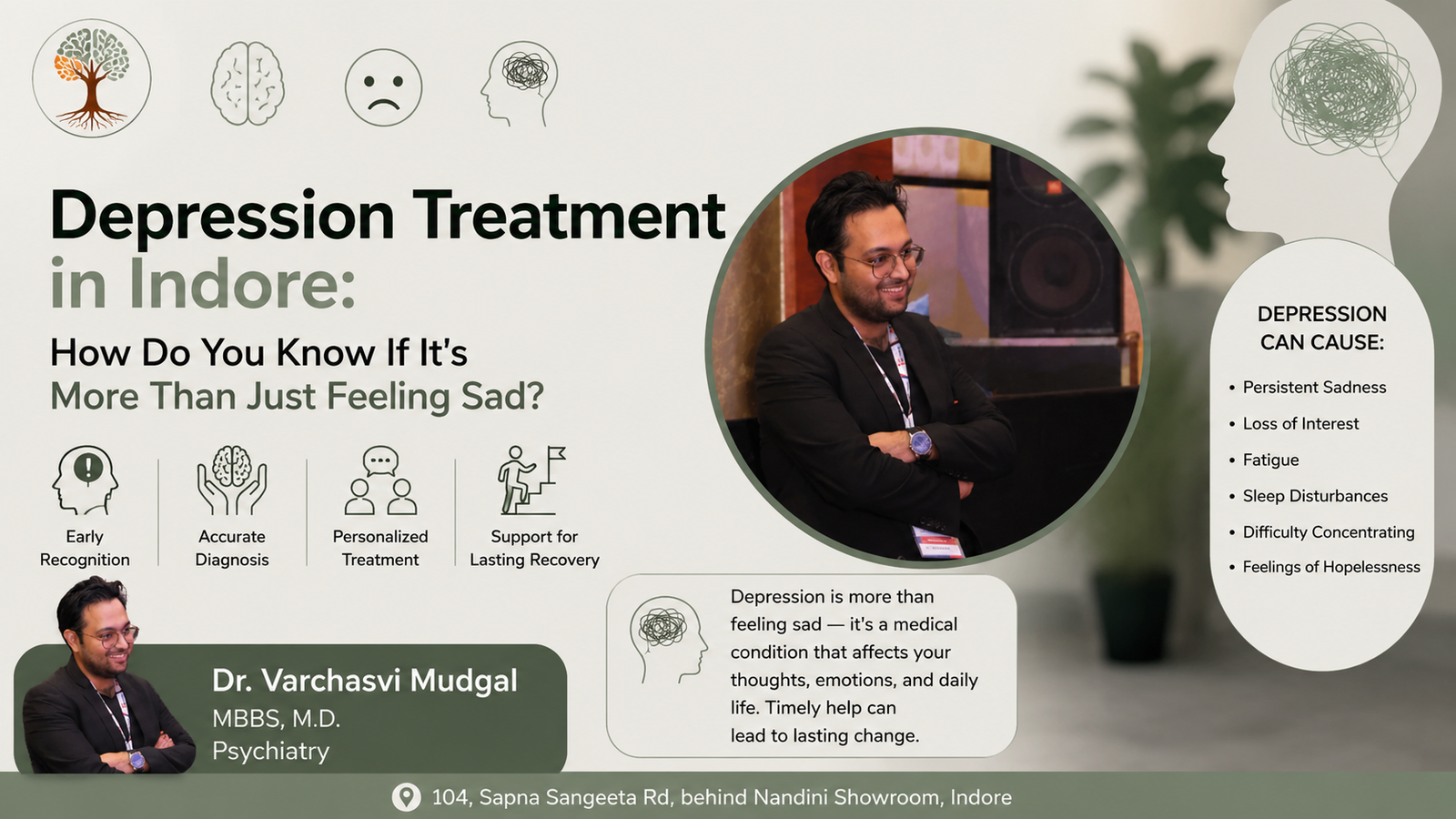
Depression Treatment in Indore can help people understand and manage persistent emotional, physical, and behavioural changes that go beyond temporary sadness. Feeling sad is a normal part of life, especially after a difficult experience, loss, relationship problem, work pressure, or personal setback. In many situations, these feelings improve with time, emotional support, and healthy coping habits.
However, depression is more than simply feeling sad. It can affect sleep, appetite, concentration, motivation, relationships, work, studies, and everyday activities. Some people may continue functioning outwardly while struggling internally for weeks or even months. Recognising these changes early can make it easier to seek appropriate professional support.
A Psychiatrist in Indore, such as Dr. Varchasvi Mudgal, can evaluate persistent changes in mood and behaviour, understand possible contributing factors, and recommend a personalised treatment approach based on the individual’s symptoms and overall well-being.
Depression Treatment in Indore: Understanding the Difference Between Sadness and Depression
Sadness is generally linked to a specific situation. For example, losing a job, experiencing a breakup, failing an important examination, or losing someone close can naturally cause emotional pain. With time, many people gradually adjust to the situation and begin enjoying their normal activities again.
Depression may be different. The low mood can persist for a prolonged period and may occur even when there is no obvious external reason. A person may feel emotionally empty, hopeless, exhausted, or disconnected from things they once enjoyed.
A Depression Doctor in Indore looks at several factors while assessing whether symptoms may indicate depression, including their duration, intensity, frequency, and effect on daily life.
Some common differences include:
- Sadness may gradually improve as circumstances change.
- Depression can continue even when life circumstances improve.
- A sad person may still enjoy certain activities.
- Depression can significantly reduce interest and pleasure.
- Temporary sadness may not affect daily functioning.
- Depression can interfere with work, education, relationships, and self-care.
- Depression may involve persistent feelings of hopelessness, guilt, or worthlessness.
Not every period of sadness requires professional treatment. However, persistent or worsening symptoms should not be ignored.
Depression Treatment in Indore: What Are the Common Signs of Depression?
Depression can affect people differently. Some may experience emotional changes, while others notice problems with sleep, appetite, energy, concentration, or social behaviour. Recognising these signs early can help a person understand when Depression Treatment in Indore may be appropriate.
Persistent Sadness and Low Mood
Feeling sad, empty, or emotionally low for a prolonged period can be an important sign of depression. A person may find it difficult to feel better even after rest, distraction, or spending time with others.
Loss of Interest in Daily Activities
Depression may cause a person to lose interest in hobbies, work, exercise, socialising, or activities they once enjoyed. This loss of interest can gradually affect personal and professional life.
Changes in Sleep and Appetite
Sleep and eating patterns may change during depression. Some people experience difficulty sleeping, while others sleep more than usual. Appetite may also increase or decrease, sometimes causing noticeable weight changes.
Constant Tiredness and Low Energy
A person may feel physically and mentally exhausted even after getting enough rest. Simple activities such as working, studying, exercising, or completing household responsibilities may start feeling difficult.
Difficulty Concentrating
Depression can affect concentration, memory, decision-making, and productivity. A person may struggle to focus on conversations, work assignments, studies, or everyday tasks.
Feelings of Hopelessness or Worthlessness
Persistent hopelessness, excessive guilt, or negative thoughts about oneself can be associated with depression. When these feelings continue, discussing them with a Psychiatrist in Indore can help identify the right support.
When Should You Consider Depression Treatment in Indore?
Many people ignore persistent sadness, thinking it will improve on its own. However, professional help may be useful when symptoms start affecting daily life.
Consider consulting a Depression Doctor in Indore if you experience:
- Persistent low mood or hopelessness
- Loss of interest in daily activities
- Changes in sleep or appetite
- Constant tiredness or low energy
- Difficulty concentrating
- Social withdrawal
- Declining work or academic performance
- Difficulty managing daily responsibilities
Depression Treatment in Indore: How Is Depression Diagnosed?
Depression is usually diagnosed through a detailed clinical evaluation rather than a single blood test or scan. A Psychiatrist in Indore may ask about your mood, sleep, appetite, energy, concentration, thoughts, relationships, and daily functioning.
The doctor may also consider your medical history, medications, previous mental health concerns, family history, and major life events. Based on the evaluation, Depression Treatment in Indore may include:
- Psychiatric assessment
- Psychotherapy or counselling
- Medication when required
- Lifestyle guidance
- Stress-management support
- Regular follow-up
What Are the Treatment Options for Depression in Indore?
Depression Treatment in Indore depends on the severity of symptoms, overall health, treatment history, and individual needs. A Depression Doctor in Indore can assess the condition and suggest a suitable treatment approach based on the patient’s symptoms.
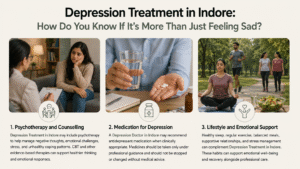
Psychotherapy and Counselling
Depression Treatment in Indore may include psychotherapy to help manage negative thoughts, emotional challenges, stress, and unhealthy coping patterns. CBT and other evidence-based therapies can support healthier thinking and emotional responses.
Medication for Depression
A Depression Doctor in Indore may recommend antidepressant medication when clinically appropriate. Medicines should be taken only under professional guidance and should not be stopped or changed without medical advice.
Lifestyle and Emotional Support
Healthy sleep, regular exercise, balanced meals, supportive relationships, and stress management can complement Depression Treatment in Indore. These habits can support emotional well-being and recovery alongside professional care.
How Can a Depression Doctor in Indore Help With Recovery?
Recovery from depression is not always immediate. Some people begin noticing improvement gradually, while others may require adjustments to their treatment approach.
A Depression Doctor in Indore can monitor symptoms over time, evaluate treatment response, address concerns, and modify the care plan when necessary. Regular follow-up can also help identify changes before they become more difficult to manage.
Patients should openly discuss improvements as well as difficulties. If a treatment causes unwanted effects or does not seem to be helping, communicating this to the doctor is important rather than stopping treatment independently.
Recovery can also involve rebuilding daily routines, reconnecting socially, improving sleep, returning to enjoyable activities, and developing healthier ways to manage stress.
Why Choose Dr. Varchasvi Mudgal for Depression Treatment in Indore?
Dr. Varchasvi Mudgal is a Gold Medalist in M.D. Psychiatry from Madhya Pradesh Medical Science University, Jabalpur, with over 7 years of experience in psychiatric care.
He provides care for concerns including depression, anxiety disorders, panic attacks, OCD, bipolar disorder, psychosis, PTSD, stress-related concerns, migraine, sleep disorders, and other mental health conditions.
His approach includes evidence-based therapies such as Cognitive Behavioural Therapy (CBT), Dialectical Behaviour Therapy (DBT), EMDR, Psychodynamic Psychotherapy, and Supportive Counselling, depending on the patient’s needs.
For people considering Depression Treatment in Indore, personalised assessment is important because symptoms, causes, and treatment responses can vary significantly from person to person.
How Can Family Members Support Someone With Depression?
Family support can make a meaningful difference, but knowing what to say and how to respond is important.
Instead of telling someone to “think positively” or “just forget about it,” family members can listen without judgement and encourage the person to seek appropriate professional support.
Helpful ways to provide support include:
- Listen patiently without dismissing their feelings.
- Encourage professional consultation when symptoms persist.
- Offer practical help with daily responsibilities.
- Stay connected through regular communication.
- Encourage healthy routines without forcing them.
- Be patient with gradual progress.
- Avoid criticism or comparisons with other people.
Family members should also take statements about self-harm or suicide seriously. If someone expresses such thoughts or appears to be in immediate danger, urgent professional help should be sought.
FAQ – Depression Treatment in Indore
1. How Do I Know If I Need Depression Treatment in Indore?
If persistent sadness, loss of interest, fatigue, sleep changes, or hopelessness begin affecting daily life, Depression Treatment in Indore can help identify the cause and suitable care.
2. Can Normal Sadness Become Depression?
Normal sadness does not always become depression. However, if low mood continues for a long time or affects daily activities, relationships, or work, a Depression Doctor in Indore can provide an appropriate evaluation.
3. When Should I Consult a Psychiatrist in Indore for Depression?
Consider consulting a Psychiatrist in Indore when symptoms persist for several weeks or begin affecting sleep, appetite, concentration, relationships, or daily responsibilities.
4. What Does a Depression Doctor in Indore Do?
A Depression Doctor in Indore evaluates your symptoms, medical history, emotional health, and daily functioning before recommending a suitable treatment approach.
5. Is Medication Always Required for Depression?
No. Depression Treatment in Indore may include psychotherapy, counselling, lifestyle support, medication, or a combination, depending on the individual’s symptoms and needs.
6. Can Depression Affect Physical Health?
Yes. Depression can affect sleep, appetite, energy, concentration, and overall well-being. A Psychiatrist in Indore can assess these symptoms and recommend appropriate support.
Conclusion: When to Seek Depression Treatment in Indore
Feeling sad after a difficult experience is a normal part of life. However, when sadness becomes persistent and is accompanied by loss of interest, fatigue, sleep or appetite changes, concentration difficulties, hopelessness, social withdrawal, or difficulty managing everyday responsibilities, it may be time to look beyond temporary sadness.
Depression Treatment in Indore should be based on a proper evaluation rather than self-diagnosis or comparison with someone else’s experience. The right approach may involve therapy, medication, lifestyle support, or a combination of these depending on the individual’s needs.
If you or someone close to you has been experiencing persistent emotional difficulties, consulting Dr. Varchasvi Mudgal, a Psychiatrist in Indore, can help you understand the symptoms and explore appropriate treatment options. With timely professional support and a personalised approach, managing depression and improving quality of life can become a realistic goal.